DOG DAYS: 15th ANNIVERSARY CONCERTDOG DAYS: 15th ANNIVERSARY CONCERT
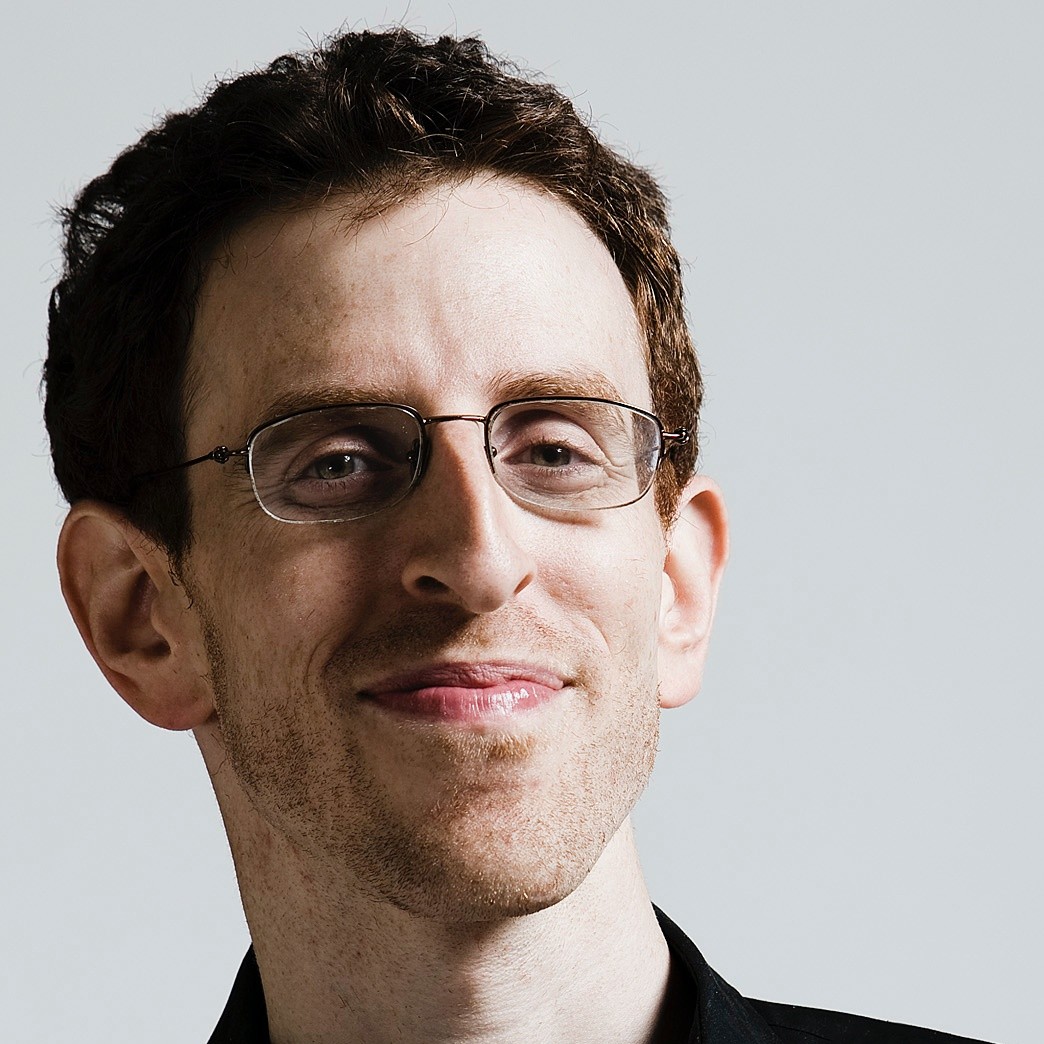
ROYCE VAVREK, LIBRETTIST
National Sawdust
National Sawdust
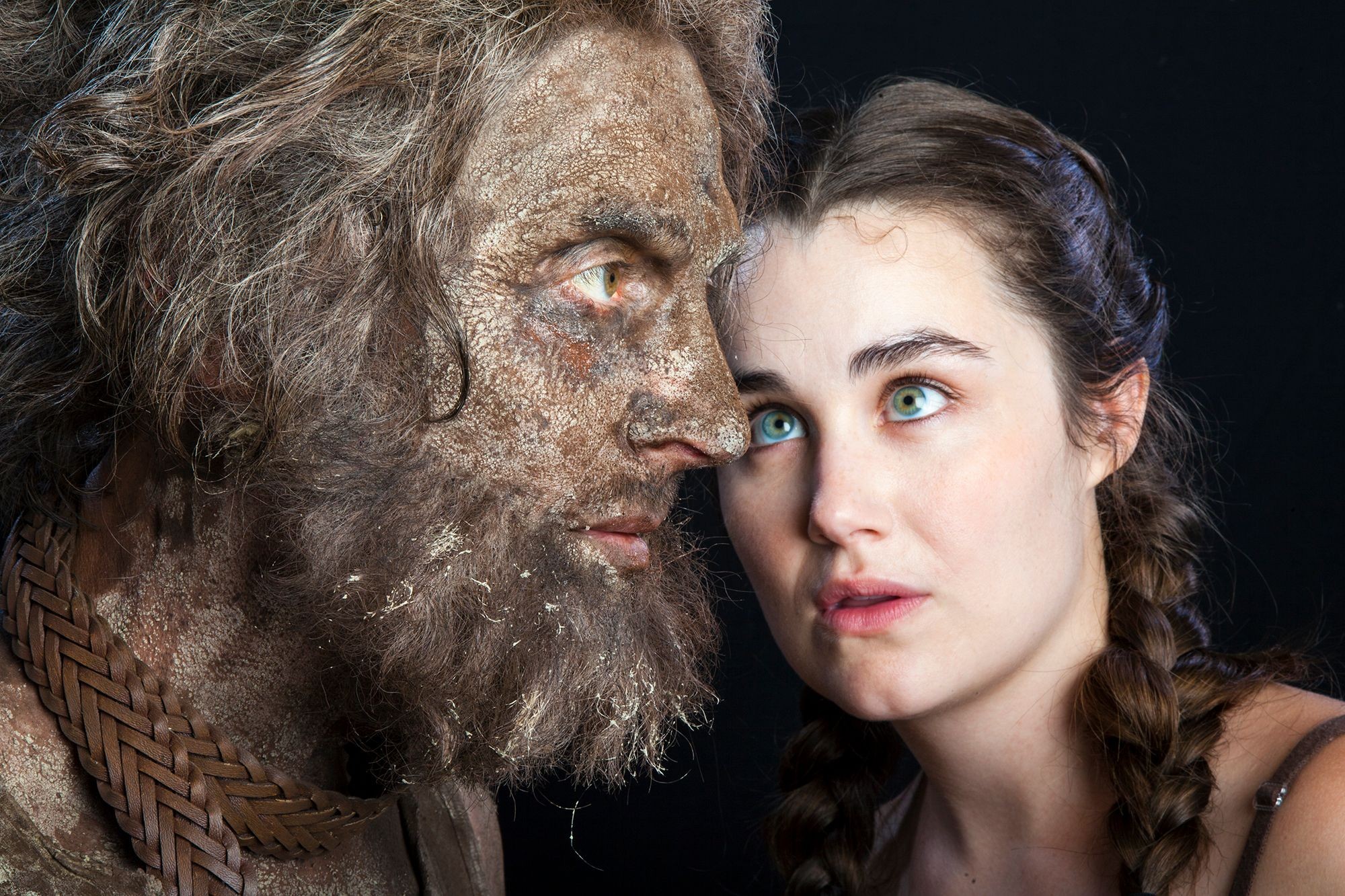
For its 15th anniversary, David T. Little and Royce Vavrek’s haunting contemporary opera Dog Days returns in a special concert presentation. Based on the short story by Judy Budnitz, the work follows thirteen-year-old Lisa and her family as they struggle to survive in a near-future America unraveling under the pressures of war, hunger, and emotional collapse. As food disappears and hope erodes, each member of the family confronts the limits of their humanity in different ways. Their fragile world is further disrupted by the arrival of Prince, a mysterious man in a dog suit begging for scraps. Is he delusional, enlightened, or simply adapting better than the humans around him? By turns brutal, darkly funny, and deeply moving, Dog Days is a powerful meditation on survival, morality, and the animal instincts that emerge in times of crisis.
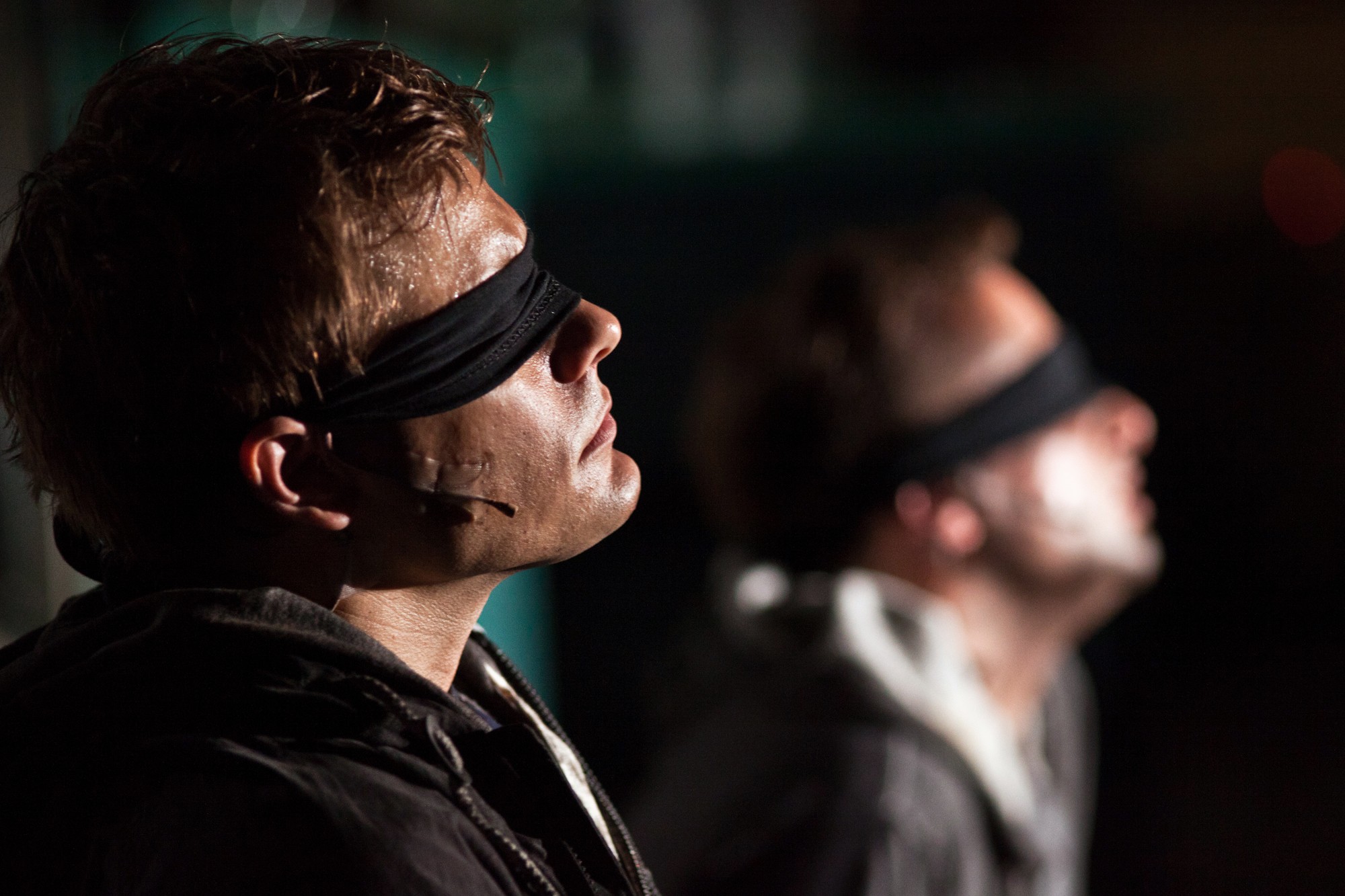
CREATIVE TEAM
COMPOSER — DAVID T. LITTLE
LIBRETTIST — ROYCE VAVREK
ORIGINAL DIRECTION — ROBERT WOODRUFF
MUSIC DIRECTOR — ALAN PIERSON
Based On The Short Story "Dog Days" By — JUDY BUDNITZ
CREATIVE TEAM
DAVID T. LITTLE
COMPOSER & LIBRETTIST
A natural musical storyteller with “a knack for overturning musical conventions” (The New York Times), composer David T. Little is known for stage, concert, and screen works permeated with the power of the unexpected. Little probes the deep corners of human psychology, invoking political, historical, spiritual, and social themes as pathways for exploring the human condition. His broad catalog speaks to the mix of light and dark that we experience in life, unafraid to invoke the mythical, bewitching, disturbing, surreal, or comedic. He has drawn acclaim for operas including Dog Days, JFK, and the comedy Vinkensport, or The Finch Opera (all with libretto by Royce Vavrek), as well as his GRAMMY®-nominated opera Soldier Songs.
Little’s recent work Black Lodge was nominated for the 2024 GRAMMY® Award for Best Opera Recording and is the recipient of a Music Theater Now international prize. Black Lodge, a metal-infused opera with a libretto by poet Anne Waldman, was premiered by Beth Morrison Projects at Opera Philadelphia, with a soundtrack released by Cantaloupe Music. It received its European premiere at the O. Festival in Rotterdam this past May, received its West Coast Premiere in October, 2024 as part of an experiential Halloween event presented by CAP UCLA, and its New York premiere in January as part of the 2025 Prototype Festival. In November 2025, it will travel to Sweden for performance at Malmö Opera and Folkoperan.
In September, 2024, Little unveiled his opera What Belongs to You. Based on the celebrated novel by Garth Greenwell, developed for GRAMMY®-winning tenor Karim Sulayman and Alarm Will Sound, and directed by Mark Morris, and would go on to be awarded the 2025 Music Critics Association of North America Best New Opera Award. This arrived on the heels of another major work, the searching theatrical choral work, SIN-EATER, premiered in Philadelphia by The Crossing and Bergamot Quartet in the fall of 2023, conducted by Donald Nally. Based on the ancient practice of paying the poor to ritualistically “eat” the sins of the rich—allowing the privileged to move onto the next life cleansed of their guilty deeds—The Wall Street Journal praised the work’s “shattering impact.”
Little is at work on a commission from the Metropolitan Opera / Lincoln Center Theater New Works Program, as well as several other new stage, film, and concert projects.
Little has been commissioned by the world’s most prestigious institutions and performers, including recent projects for The Metropolitan Opera/Lincoln Center Theater new works program, the Kennedy Center, Baltimore Symphony Orchestra, New World Symphony, London Sinfonietta, The Crossing, Kronos Quartet, and Beth Morrison Projects. His music has been presented by Carnegie Hall, Venice Biennale, Holland Festival, LA Opera, Houston Grand Opera, Opera Philadelphia, Opéra de Montréal, the Chicago Symphony Orchestra, and the LA Philharmonic. Little’s recorded catalog includes over 20 commercial releases, on such labels as New Amsterdam Records, Pentatone, Sono Luminus, Bright Shiny Things, and Cantaloupe Music.
Little is the founding artistic director and former drummer for the amplified chamber ensemble, Newspeak, which explores the relationship of music and politics, while confronting head-on the boundaries between the classical and rock traditions. They have released four commercial recordings, with a fifth on the way.
David T. Little received a 2023 Fellowship from the New Jersey State Council on the Arts and is a recipient of the Copland House Residency Award. His music is published by Boosey & Hawkes. Learn more at www.davidtlittle.com.
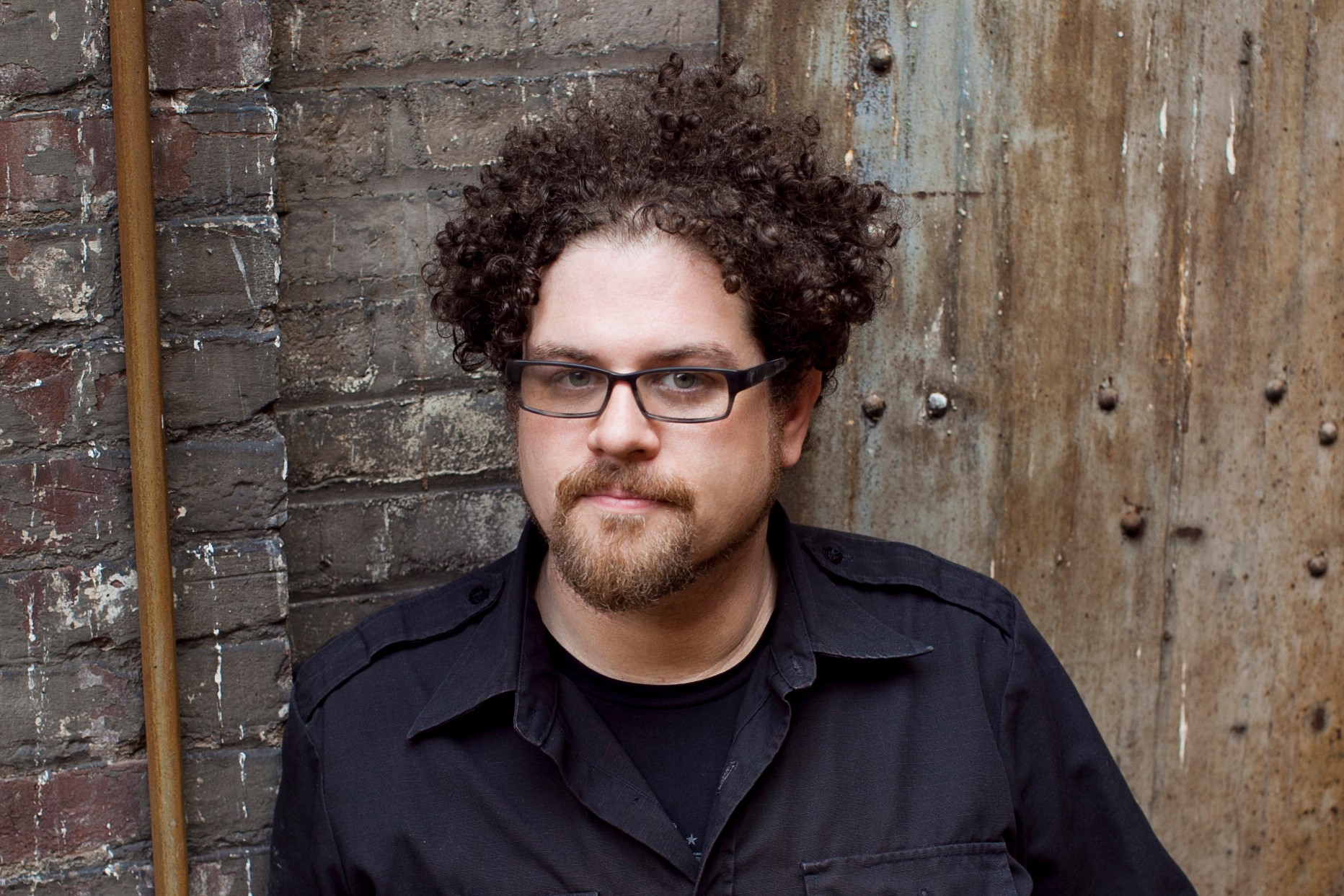
ROYCE VAVREK
LIBRETTIST
Opera/Music Theater libretti include David T. Little’s Dog Days (Zankel Hall, New York City Opera VOX) and Vinkensport, or The Finch Opera (Bard Conservatory); Jeff Myers’ The Hunger Art (American Lyric Theater, Center City Opera Theater, Burning Bayreuth); Jay Anthony Gach’s Nora at the Altar-Rail (A.L.T.); andKristin Hevner’s Bully Pulpit (Metropolis Opera Project). A founding member of The New Ensemble, he contributed lyrics ton on play: shadows of a dream and Black Snow in collaboration with composer Andrew Gerle. As a filmmaker, Royce wrote and directed From Sky and Soil (Corus Young Filmmakers Initiative), I Will Not Be Sad Anymore (Quebec Cooperative Filmmakers Initiative), Pig and Bear (Frigid Fest NY) and Good Woman, a collaboration with American fashion designer Marc Bouwer. Upcoming projects include collaborations with Missy Mazzoli, Du Yun, Nick Martin, Rachel Peters, Mark Baechle and Matt Marks. Artistic Director of opera-theater company The Coterie, founded with soprano Lauren Worsham. B.F.A: Concordia University, Montreal; M.F.A: NYU.
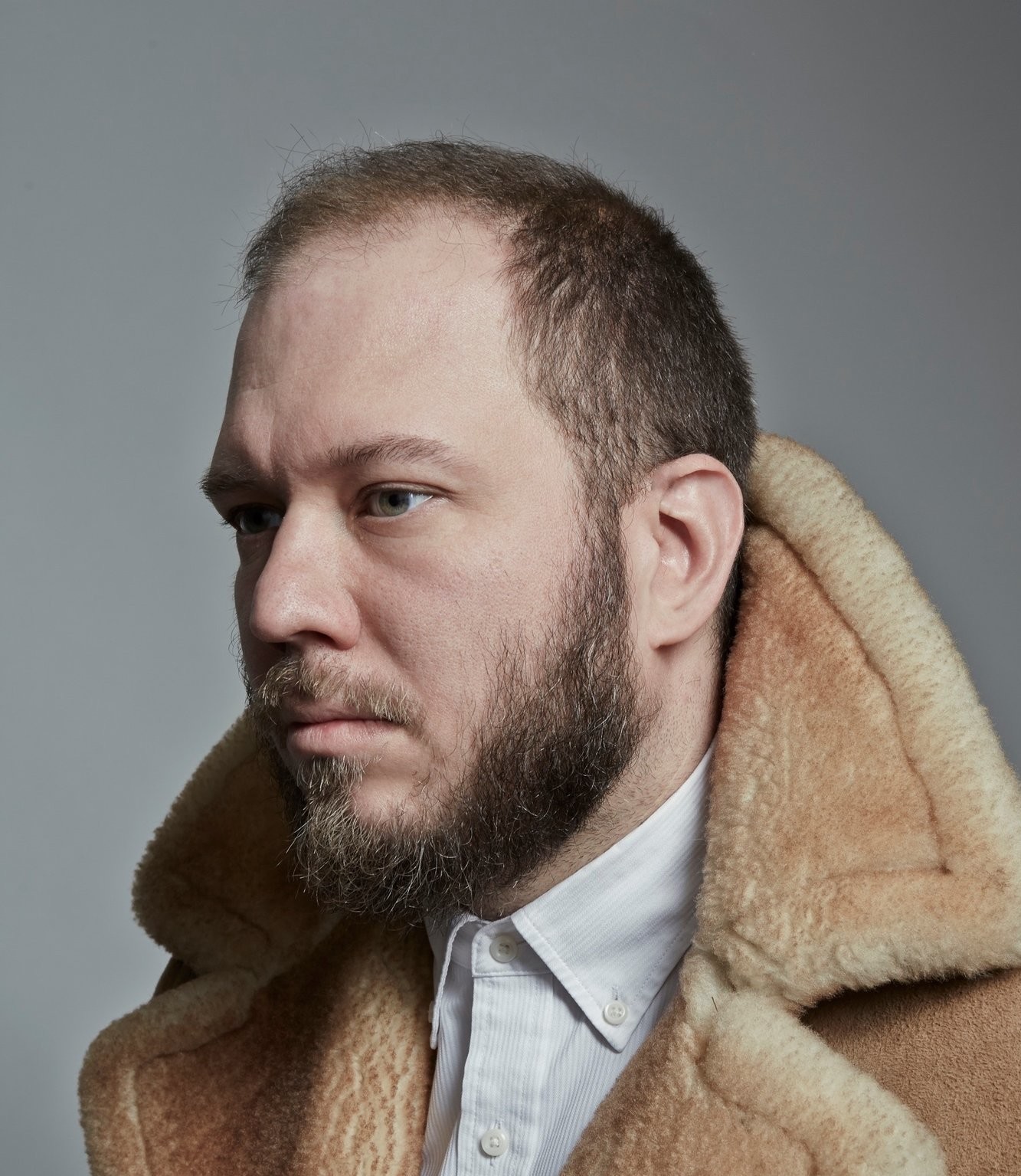
ROBERT WOODRUFF
CO-CREATOR & DIRECTOR
Robert Woodruff is one of the country's most versatile stage directors. His theatrical vocabulary encompasses a remarkable range of styles, from the naturalistic simplicity of his productions of Shepard and Bond to his baroque deconstructions of Shakespeare and Brecht. Woodruff collaborates with living playwrights and revisits the masterpieces of the classical canon with equal flair. His body of work resists categorization, and is united only by the power of his imagination and the rigor that he demands of his actors and designers. After thirty years of directing, Woodruff continues to develop fresh dramatic forms with each production.
Woodruff was born in Brooklyn in 1947 and spent his childhood on Long Island. After gaining a B.A. in political science at the University of Buffalo he began graduate studies at the City College of New York. In 1971, disenchanted with the reactionary New York theatre establishment, he moved to San Francisco to seek out new writers and artistic collaborators. The following year he co-founded the Eureka Theatre, where he served as Artistic and Resident Director until 1978.
In 1976 Woodruff established his second theatre, the Bay Area Playwrights Festival, a summer forum for the development of new plays that is still flourishing. It was here that Woodruff first worked with the writer Sam Shepard, on a libretto that Shepard had developed for the national bicentennial celebrations, The Sad Lament of Pecos Bill. The thirty-three year-old playwright was still better known in London than the States, and his collaborations with Woodruff marked a turning point in both men's careers. For the next five years Woodruff was virtually the sole director of Shepard's work, staging the American premiere of Curse of the Starving Class at the New York Shakespeare Festival in 1978, the world premieres of Buried Child (1978) and True West (1980) in San Francisco and New York, and the touring productions of Tongues and Savage/Love, which Shepard co-authored with the performer Joseph Chaikin.
While staging Shepard's naturalistic family dramas, Woodruff developed an unadorned directorial style that emphasized textual precision and subtlety of performance over elaborate stagecraft. From time to time he still draws on this minimalist form, in his recent New York revival of Edward Bond's Saved, for example, and in domestic interludes in Richard II, Full Circle, and In the Jungle of Cities, where time slows almost to a halt, and the most mundane details take on poetic significance.
In 1983 Woodruff staged The Comedy of Errors with the The Flying Karamazov Brothers at the Goodman Theatre in Chicago and at Lincoln Center in New York City. The production was the first in which Woodruff's directorial hand was immediately visible, and audiences were astonished to find fire-eaters, acrobats, and jugglers delivering Shakespeare's language. His formal experimentation continued with a series of major productions at the La Jolla Playhouse in California, and other regional houses including the Mark Taper Forum, the Guthrie Theatre, and the American Conservatory Theatre. Although he continued to stage new plays, he developed a reputation as one of a handful of progressive directors who enjoy working with classic texts from every period.
At La Jolla, Woodruff's productions included radical deconstructions of The Tempest, Happy Days, and Man's a Man, the first part of his cycle of Brecht's early plays that continued with Baal (1990) at Trinity Repertory Company, and In the Jungle of Cities (1998) at A.R.T. Woodruff is particularly adept at unpacking the visceral poetry of Brecht's sprawling epics. Writing in the Boston Globe, Kevin Kelly described Baal as "fiery onslaught. It burns right in front of you, scorches everything it touches, and draws you into the roar of its out-of-control furnace. It may be the single most brilliant Brecht I've ever seen."
Woodruff's investigation of the classics continued with Julius Caesar, The Duchess of Malfi, Medea, and The Changeling. The latter two he staged in Israel, where he has established a considerable body of work. Although these revivals were stylistically very different from each other, they all challenged conventional notions of scale and design. Woodruff frequently avoids a unified aesthetic style in his productions, preferring to create startling visual and aural juxtapositions that shed new light on canonical texts. "Unity is overrated," he once said. "Defining a whole and making all its pieces correspond to that oneness can lead to a stifling politeness. I'd rather take each moment and make it burn, make that color very bright."
One of Woodruff's greatest strengths as a director is his ability to collaborate. Whether staging the first production of a new play or reviving a classical masterpiece, his writers, actors, and designers work with him as equals. He has built firm relationships with some of the world's finest playwrights, performers, and artists, including the scenic designers Douglas Stein and George Tsypin, who have contributed much to Woodruff's visual style. Although he has a strong aesthetic vision, Woodruff allows his collaborators an unusual latitude in shaping each production. "I don't try to control, I try to encourage," he once told an interviewer. "There's something I like about avoiding agreements. Obviously the set designer and the costume designer have to talk about color, but I would almost like to have them separate, to make their own statement. If everybody responds to the material in a way that's true to them, what emerges is the resonance of all those voices rather than the agreement of all those voices. It has to be more interesting."
In recent years, one of Woodruff's chief collaborators has been the playwright Charles L. Mee, who shares his taste for collage composition. Woodruff's A.R.T. production of Mee's Full Circle was a fine example of the director's mature style - a patchwork of dramatic forms that continuously subverted the audience's expectations, forcing them into a new encounter with apparently familiar material, and providing an ironic commentary on Mee's text and the political eruption that it dramatizes. As Full Circle admirably demonstrated, although Woodruff's reputation is as a director of intensely introspective tragedies, he is equally at home in a world of dazzling vaudeville.
Although he lives in New York, Woodruff seldom directs there, preferring the more generous schedules of the larger regional theatres. "You can't do The Comedy of Errors with nineteen vaudevillians in Manhattan," he once said. Since 1997 he has taught directing and acting as Assistant Professor at Columbia University, and has earned a reputation as one of the nation's most committed and popular mentors. In 1983 he told Scott Cummings, then a student at the Yale School of Drama, that one of his greatest regrets about theatre in the States was the lack of formal apprenticeship. "As a director that's very difficult," he said, "because of the responsibility you assume with your role. Directing is by its very nature a master craft. It takes years." Eighteen years later, Robert Woodruff has become one of the undisputed master-craftsmen of the American theatre. It is a great privilege that he has agreed to make A.R.T. his artistic home, and we are thrilled to participate in the next chapter of his remarkable career.
ALAN PIERSON
MUSIC DIRECTOR
Alan Pierson is the Artistic Director and conductor of the acclaimed ensemble Alarm Will Sound, and served as the Artistic Director and conductor of the Brooklyn Philharmonic. As a guest conductor, Pierson has appeared with the Los Angeles Philharmonic, the Chicago Symphony Orchestra, the Hamburg Symphony Orchestra, L.A. Opera, Nationaltheater Mannheim, the London Sinfonietta, the Steve Reich Ensemble, the Orchestra of St. Luke's, the New World Symphony, and the Silk Road Project, among other ensembles. He is co-director of the Northwestern University Contemporary Music Ensemble, and has been a visiting faculty conductor at the Indiana University Jacobs School of Music, the Eastman School of Music, and at the Banff Centre for the Arts and Creativity. Pierson regularly collaborates with major composers and performers, including YoYo Ma, Steve Reich, Dawn Upshaw, Osvaldo Golijov, John Adams, David T. Little, Augusta Read Thomas, David Lang, Donnacha Dennehy, La Monte Young, Tyshawn Sorey, and choreographers John Heginbotham, Christopher Wheeldon, Akram Khan and Eliot Feld. He has spearheaded critically acclaimed cross-genre collaborations with artists like Yasiin Bey, Erykah Badu, and Medeski Martin and Wood. Beyond his work in the concert hall, Pierson is an avid recording producer and artist, having released 30 albums on Nonesuch Records, Sony Classical, Cantaloupe Music, Oehms Classics, and Sweetspot DVD. Mr. Pierson received bachelor degrees in physics and music from the Massachusetts Institute of Technology, and a doctorate in conducting from the Eastman School of Music. In 2022, he received the Eastman School of Music Centennial Award.