ELSEWHEREELSEWHERE
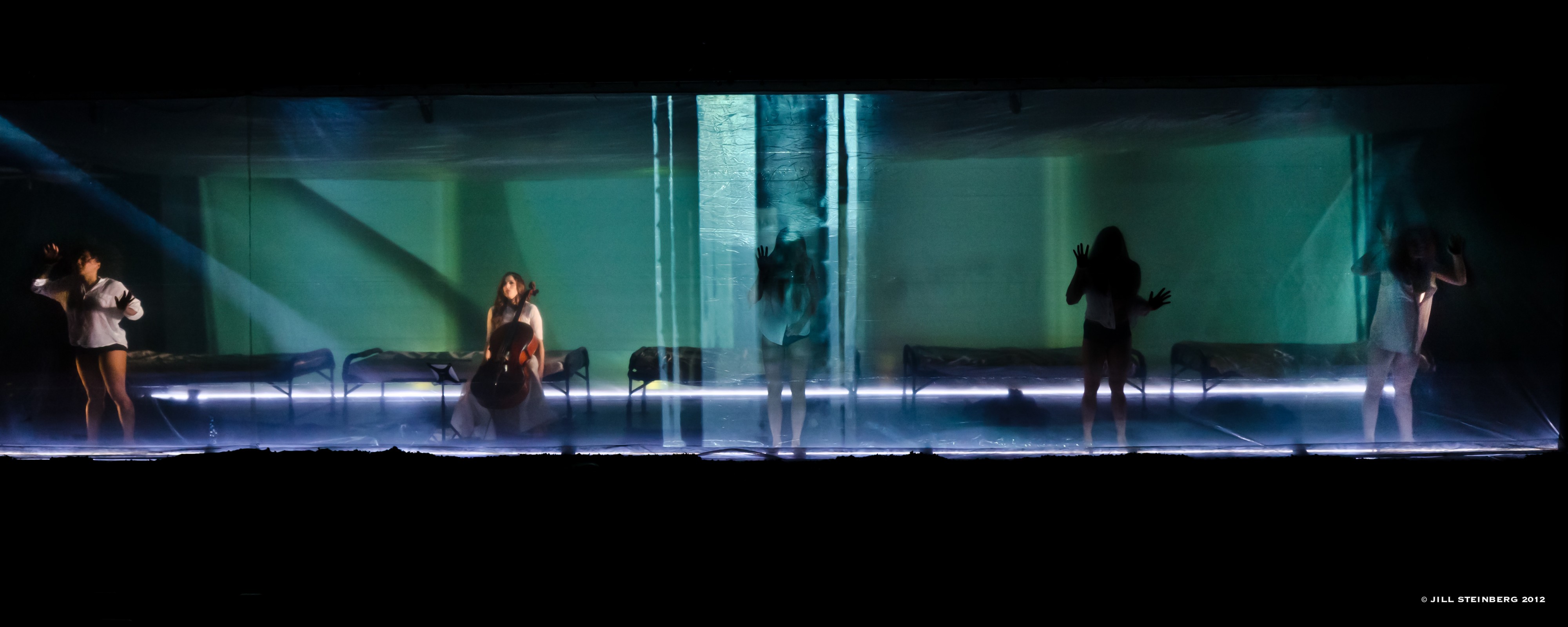
From what began as a unique collaboration between cellist Maya Beiser (hailed "the cello goddess" by The New Yorker) and theater director Robert Woodruff (called "the country's most adventurous director" by Time Out New York) comes Elsewhere, a new CelloOpera by Maya Beiser with vocalist Helga Davis. A triptych of daring compositions by Eve Beglarian, Michael Gordon and Missy Mazzoli, Elsewhere is an imaginative and psychological retelling of the biblical story of Lot's wife.
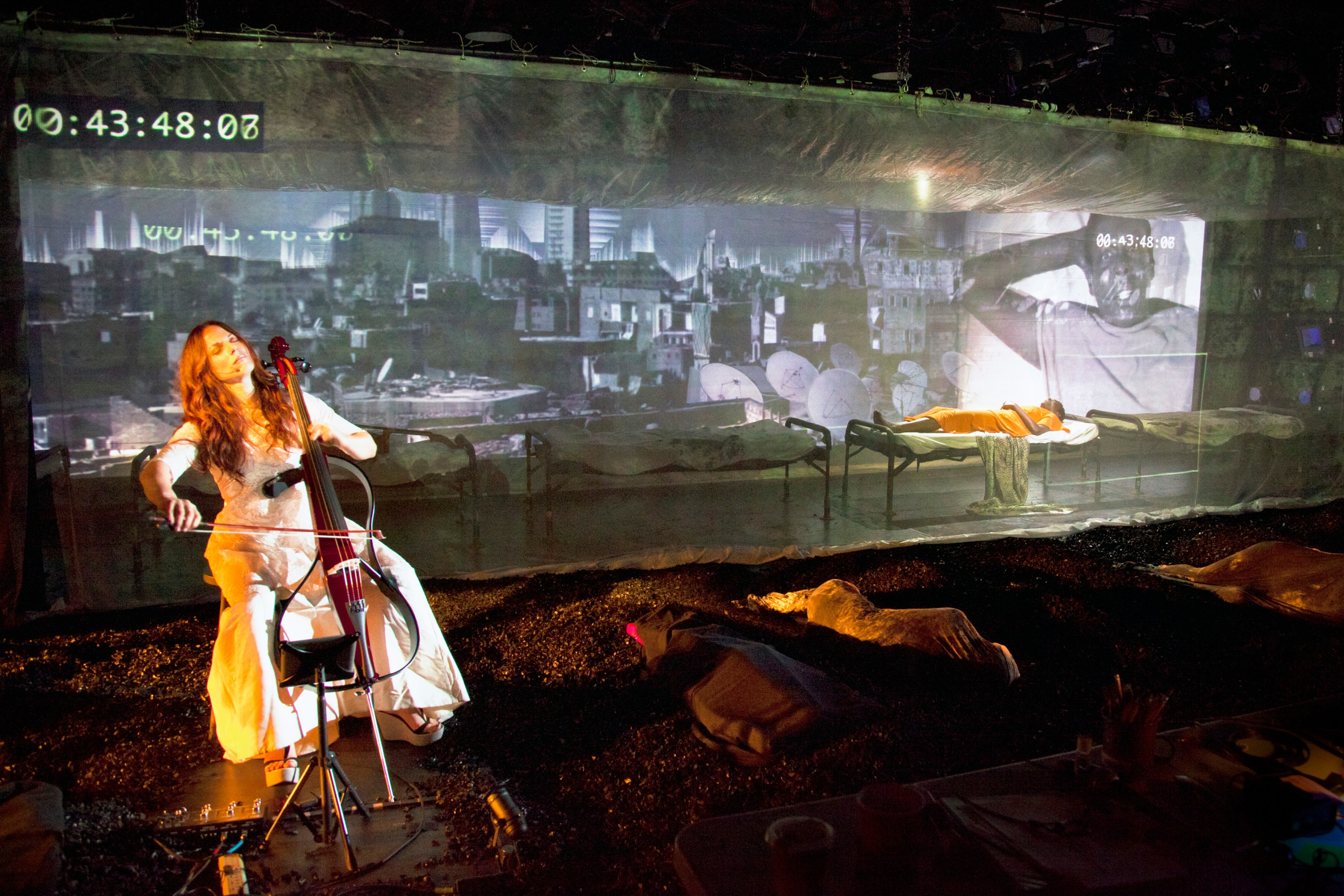
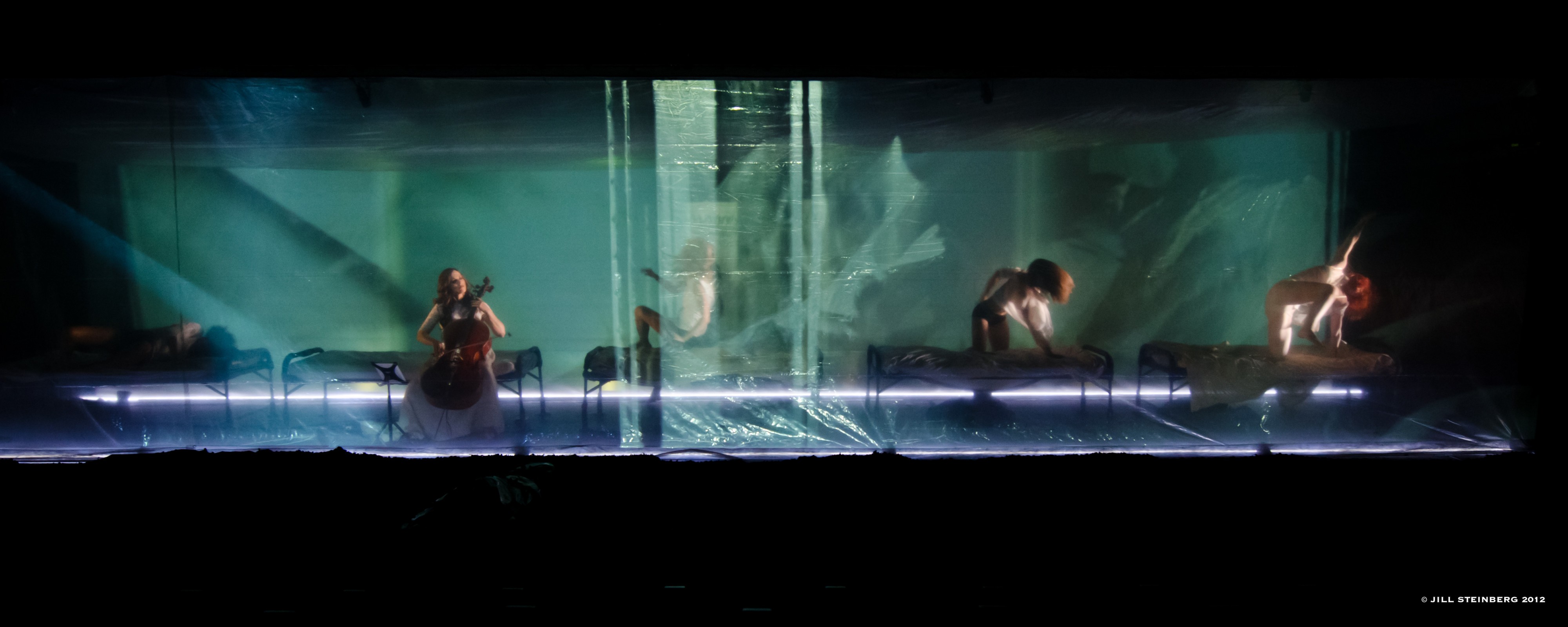
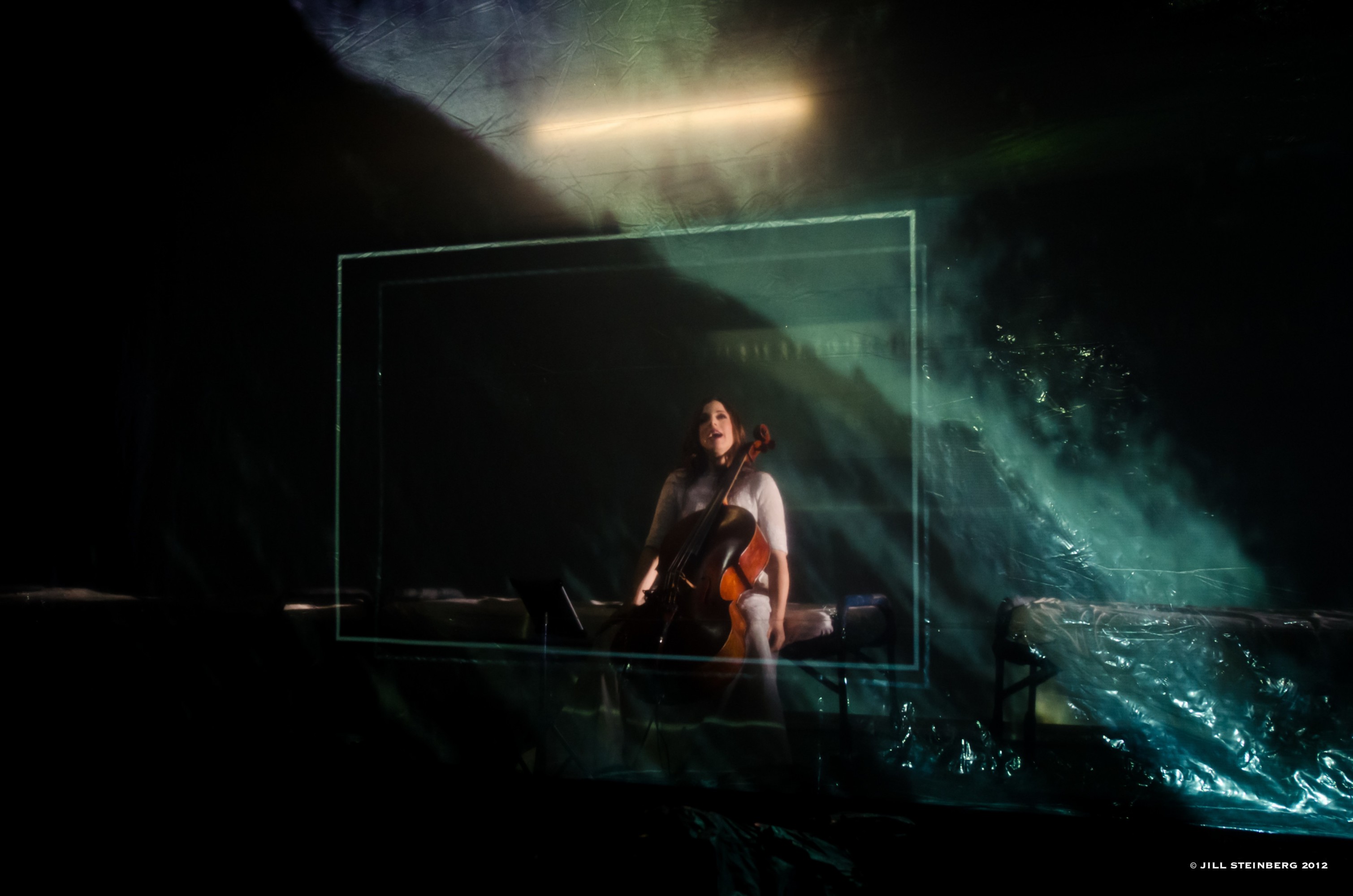
A sweeping assemblage of video designed by Peter Nigrini, choreography by Brook Notary, environments designed by Riccardo Hernandez, and amplified, distorted and acoustic cello in tandem with spoken and sung texts by Erin Cressida Wilson and Henri Michaux, Elsewhere is an urgent dialogue between two female diviners communicating from opposite poles in time, ancient and modern, catastrophic and calm, both at the brink of apocalypse and non-existence.
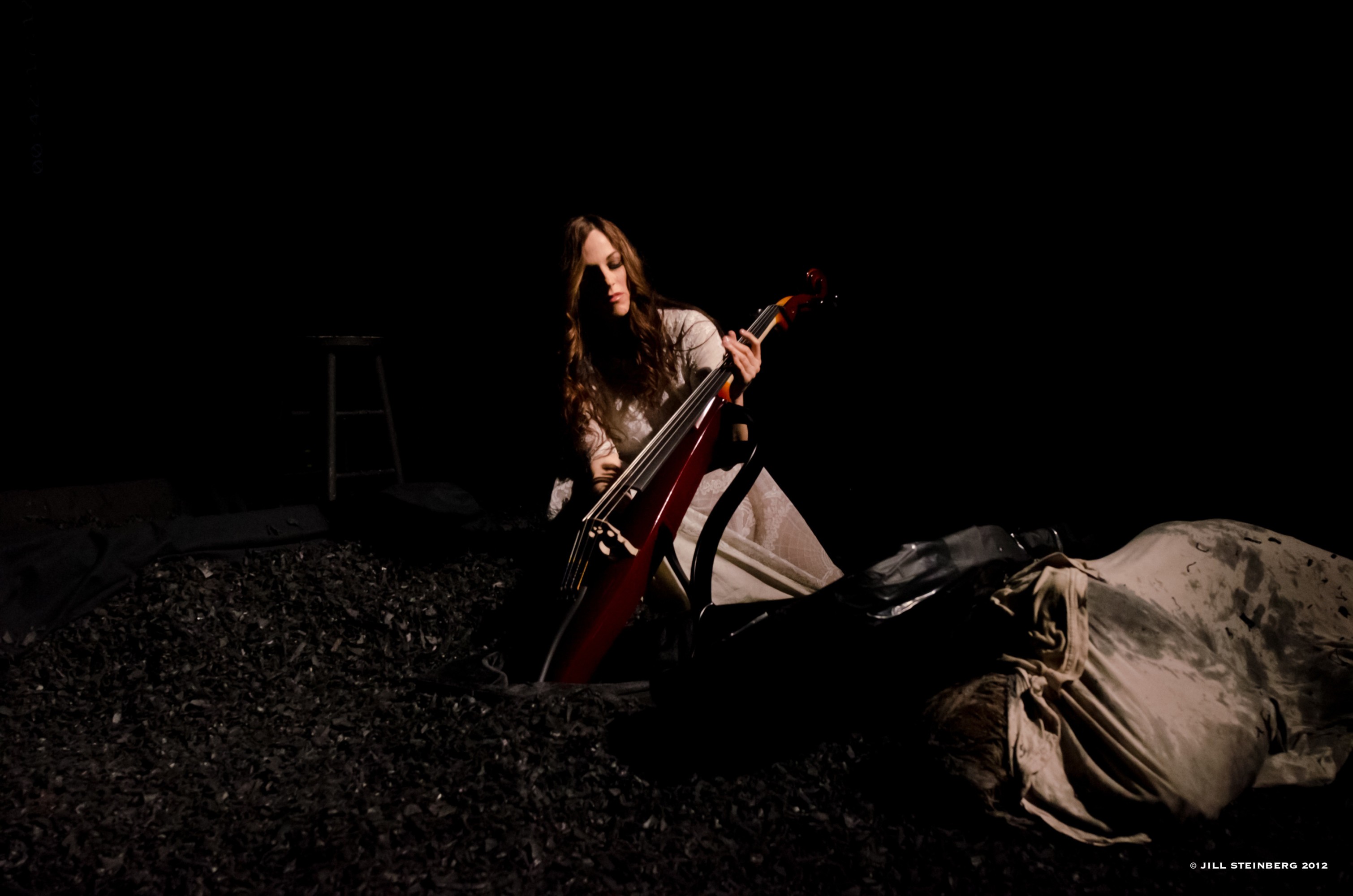
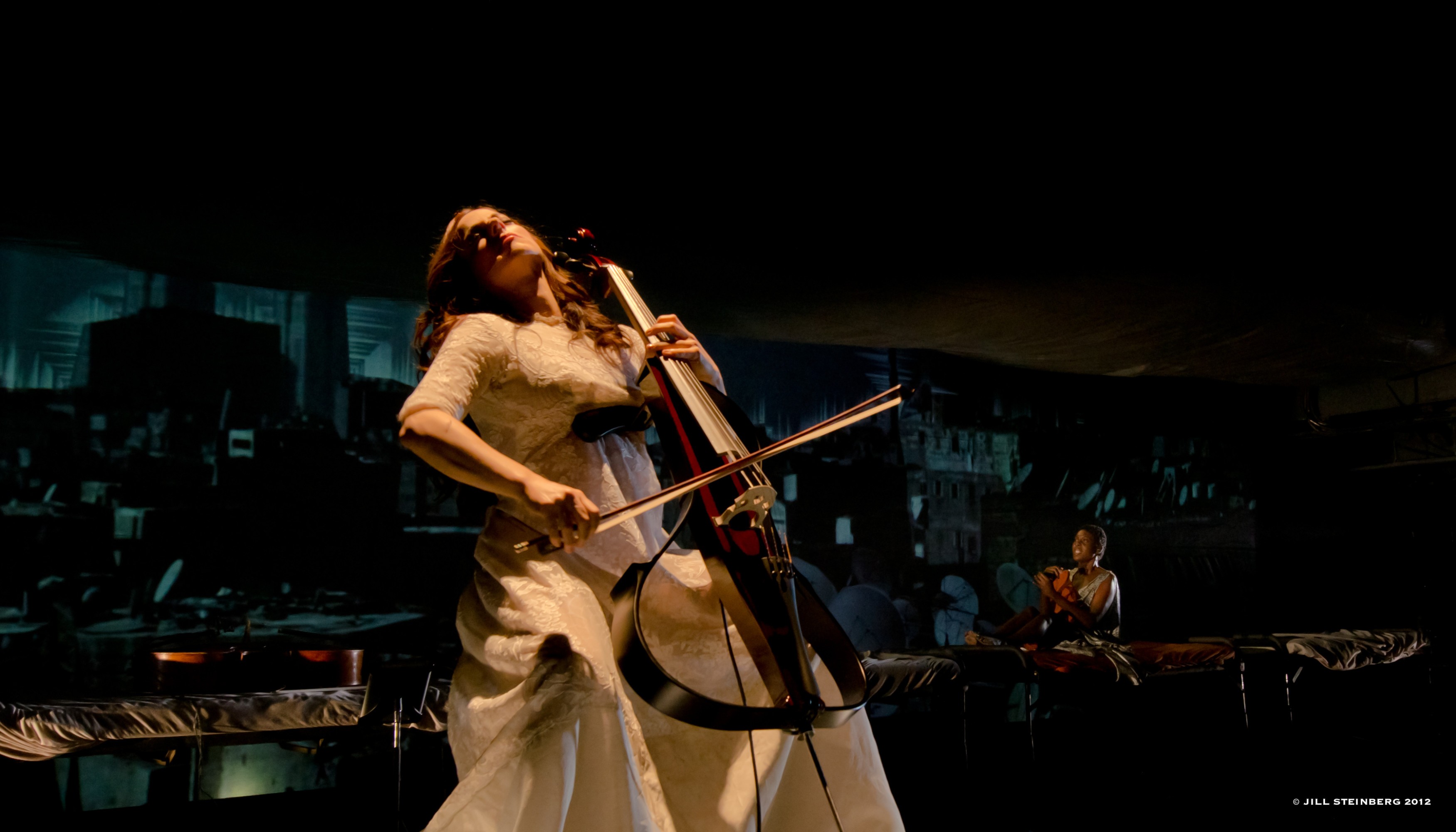
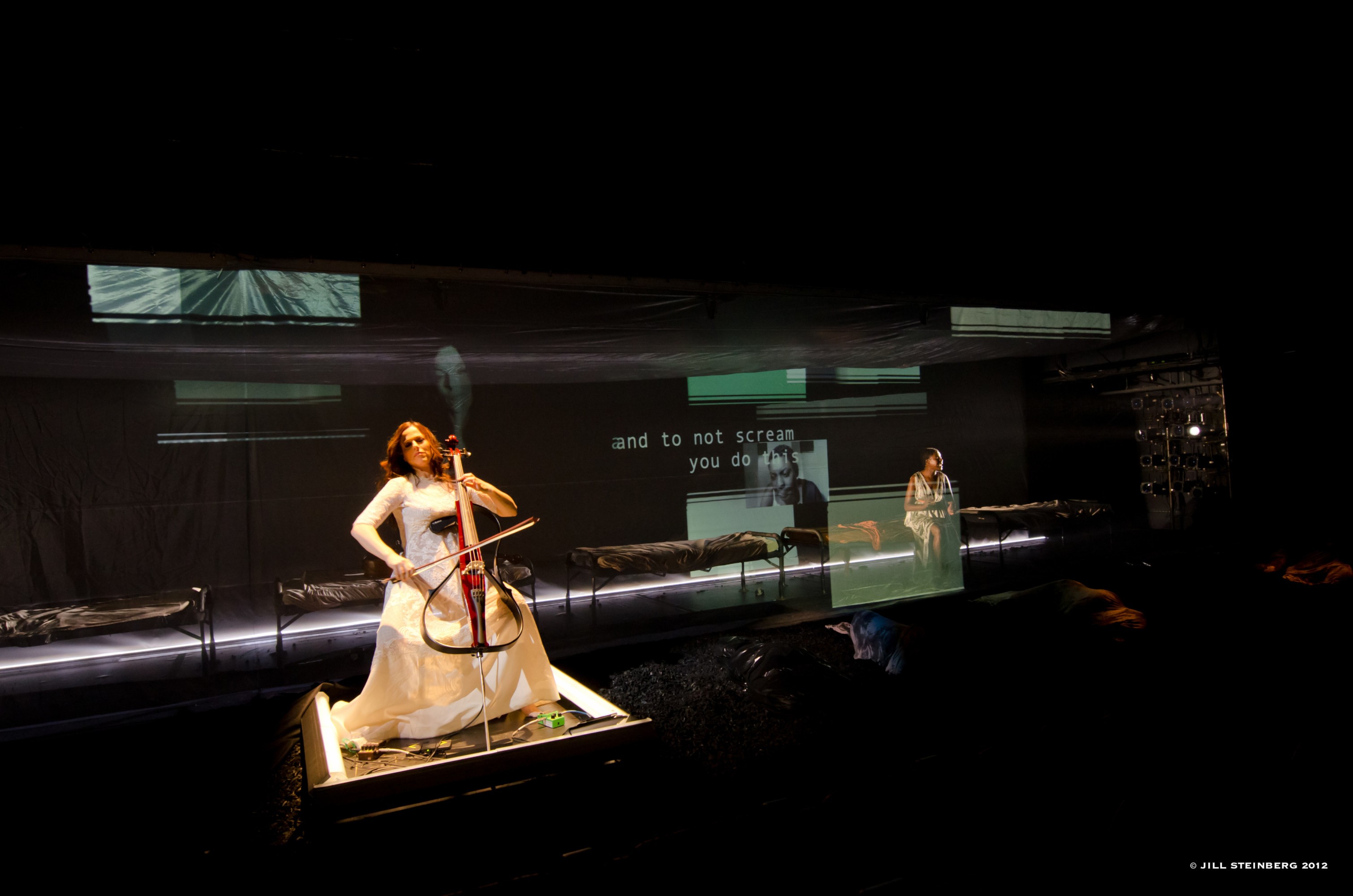
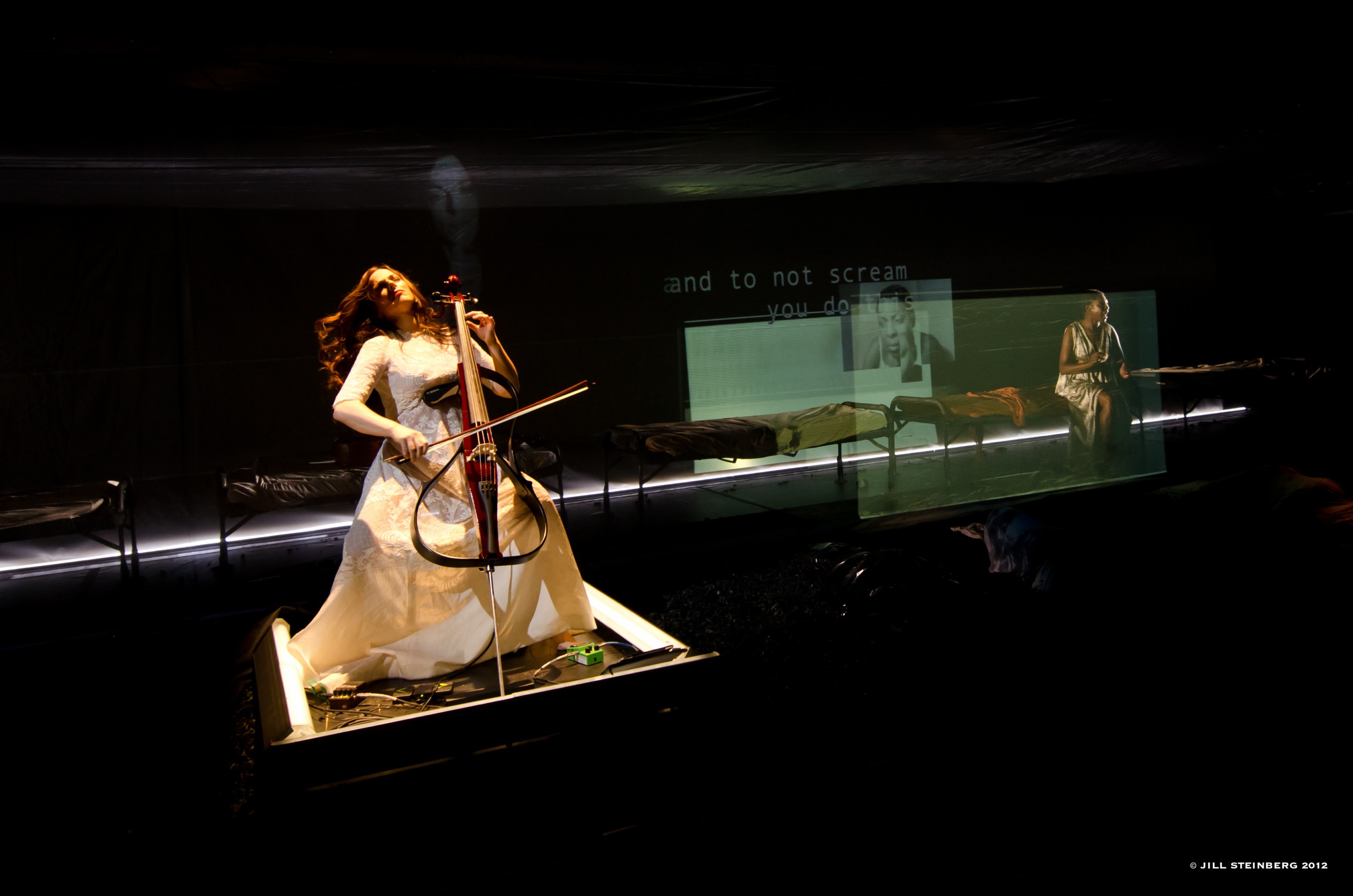
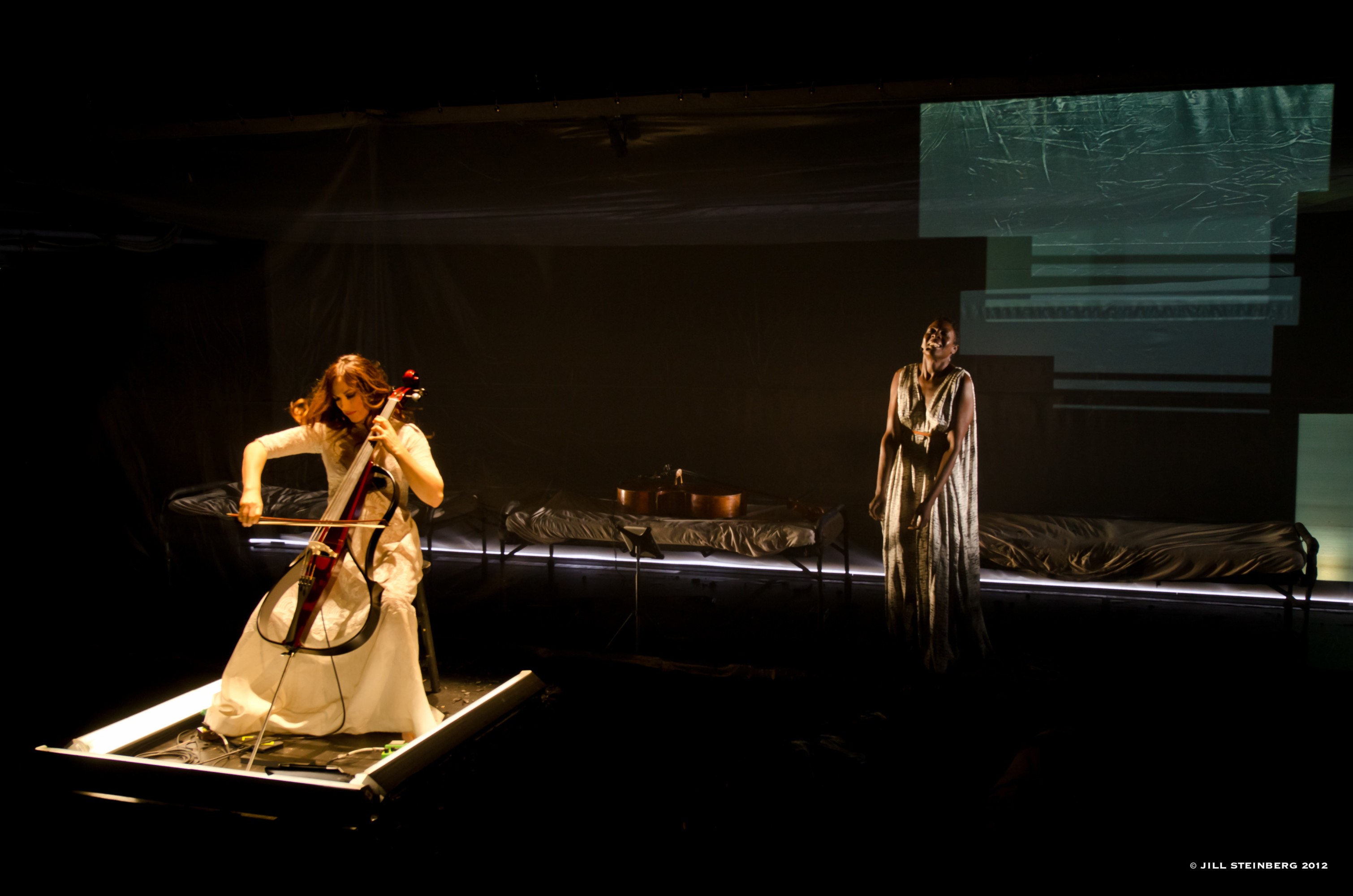
This hourlong mélange of contemporary classical music, spoken text and eye-teasing visuals provides a smashing vehicle for Beiser’s bold virtuosity.
I’ve never seen anything quite like it.
Elsewhere, a collaboration with theater director Robert Woodruff and Beiser’s most ambitious project to date, fuses dance, song, theater and film in a dynamic amalgamation that unapologetically pushes boundaries— much like the performer herself.
CREATIVE TEAM
COMPOSERS — EVE BEGLARIAN, MICHAEL GORDON & MISSY MAZZOLI
CO-CREATOR — MAYA BEISER
CO-CREATOR & DIRECTOR — ROBERT WOODRUFF
FEATURING — MAYA BEISER
CREATIVE TEAM
EVE BEGLARIAN
COMPOSER
According to the Los Angeles Times, composer and performer Eve Beglarian is a “humane, idealistic rebel and a musical sensualist.” A 2023 winner of the Arts and Letters Award for “a spectacular body of work that innovates and takes enormous risks,” she is also a 2017 winner of the Alpert Award in the Arts for her “prolific, engaging and surprising body of work,” and has been awarded the 2015 Robert Rauschenberg Prize from the Foundation for Contemporary Arts for her “innovation, risk-taking, and experimentation.” Her piece None More Than You was featured on Roomful of Teeth’s album Rough Magic, which won the 2024 Grammy Award for Best Chamber Music/Small Ensemble Performance.
Her current projects include a solo piano piece about Emily Dickinson responding to Ives’ Concord Sonata for the pianist Donald Berman, a piece about Alaskan light for the 2025 Wild Shore Festival, a queer exploration of 14th century composer Guillaume de Machaut’s multimedia love story, Le Voir Dit, and a piece for 24 basses in a grove of trees, composed for Robert Black and friends, a recording of which is forthcoming on Canteloupe Records. Since 2001, she has been creating A Book of Days, “a grand and gradually manifesting work in progress…an eclectic and wide-open series of enticements.” (Los Angeles Times)
In 2009, “Ms. Beglarian kayaked and bicycled the length of the Mississippi River [and] has translated her findings into music of sophisticated rusticity. [Her] new Americana song cycle captures those swift currents as vividly as Mark Twain did. The works waft gracefully on her handsome folk croon and varied folk instrumentation as mysterious as their inspiration.” (New York Times)
Beglarian’s chamber, choral, and orchestral music has been commissioned and widely performed by the Los Angeles Master Chorale, the American Composers Orchestra, the Bang on a Can All-Stars, the Chamber Music Society of Lincoln Center, the California EAR Unit, the Orchestra of St. Luke’s, loadbang, Newspeak, the Ekmeles Vocal Ensemble and individual performers including Maya Beiser, Lara Downes, Lucy Dhegrae, and Thomas Feng.
Highlights of Beglarian’s work in music theater includes music for Mabou Mines’ Obie-winning Dollhouse, Animal Magnetism, Ecco Porco, Choephorai, and Shalom Shanghai, all directed by Lee Breuer; Forgiveness, a collaboration with Chen Shi-Zheng and Noh master Akira Matsui; and the China National Beijing Opera Theater’s production of The Bacchae, also directed by Chen Shi-Zheng.
She has collaborated with choreographers including Ann Carlson, Robert LaFosse, Victoria Marks, Susan Marshall, David Neumann, Take Ueyama, and Megan Williams, and with visual and video artists including Cory Arcangel, Anne Bray, Vittoria Chierici, Barbara Hammer, Kevork Mourad, Shirin Neshat, Matt Petty, Bradley Wester, and Judson Wright.
Performance projects include Brim, Songs from a Book of Days, The Story of B, Open Secrets, Hildegurls’ Ordo Virtutum, twisted tutu, and typOpera.
Eve received her undergraduate degree at Princeton in 1980, where she studied with Milton Babbitt and J.K. Randall, and a Masters at Columbia in 1983. She also studied privately for several years with the musical polymath Jacques-Louis Monod. She has chosen to remain unaffiliated with the academy since then, but is delighted to mentor younger composers intermittently and informally.
Recordings of Eve’s music are available on ECM, Koch, New World, Canteloupe, Innova, Naxos, Kill Rock Stars, CDBaby, and Bandcamp.
MICHAEL GORDON
COMPOSER
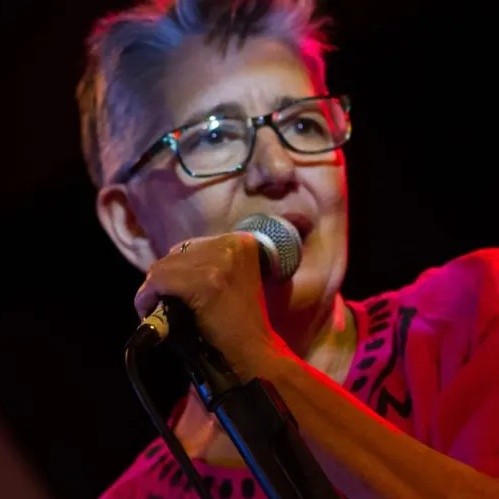
Michael Gordon is known for his monumental and immersive works. Decasia, for 55 retuned spatially positioned instruments (with Bill Morrison’s accompanying cult-classic film) has been featured on the Los Angeles Philharmonic’s Minimalist Jukebox Festival and at the Southbank Centre. Timber, a tour-de-force for percussion sextet played on amplified microtonal simantras has been performed on every continent, including by Slagwerk Den Haag at the Musikgebouw and Mantra Percussion at BAM. Natural History, a collaboration with the Steiger Butte Drum of the Klamath tribe, was premiered by the Britt Festival Orchestra and Chorus on the rim of Crater Lake (Oregon) by conductor Teddy Abrams and is the subject of the PBS documentary Symphony for Nature. Gordon’s vocal works include Travel Guide to Nicaragua, an autobiographical choral work for The Crossing; the opera What to wear with the legendary director Richard Foreman; and the film-opera Acquanetta with director Daniel Fish. Recent recordings include Clouded Yellow, Gordon’s complete string quartets performed by the Kronos Quartet.
MISSY MAZZOLI
COMPOSER
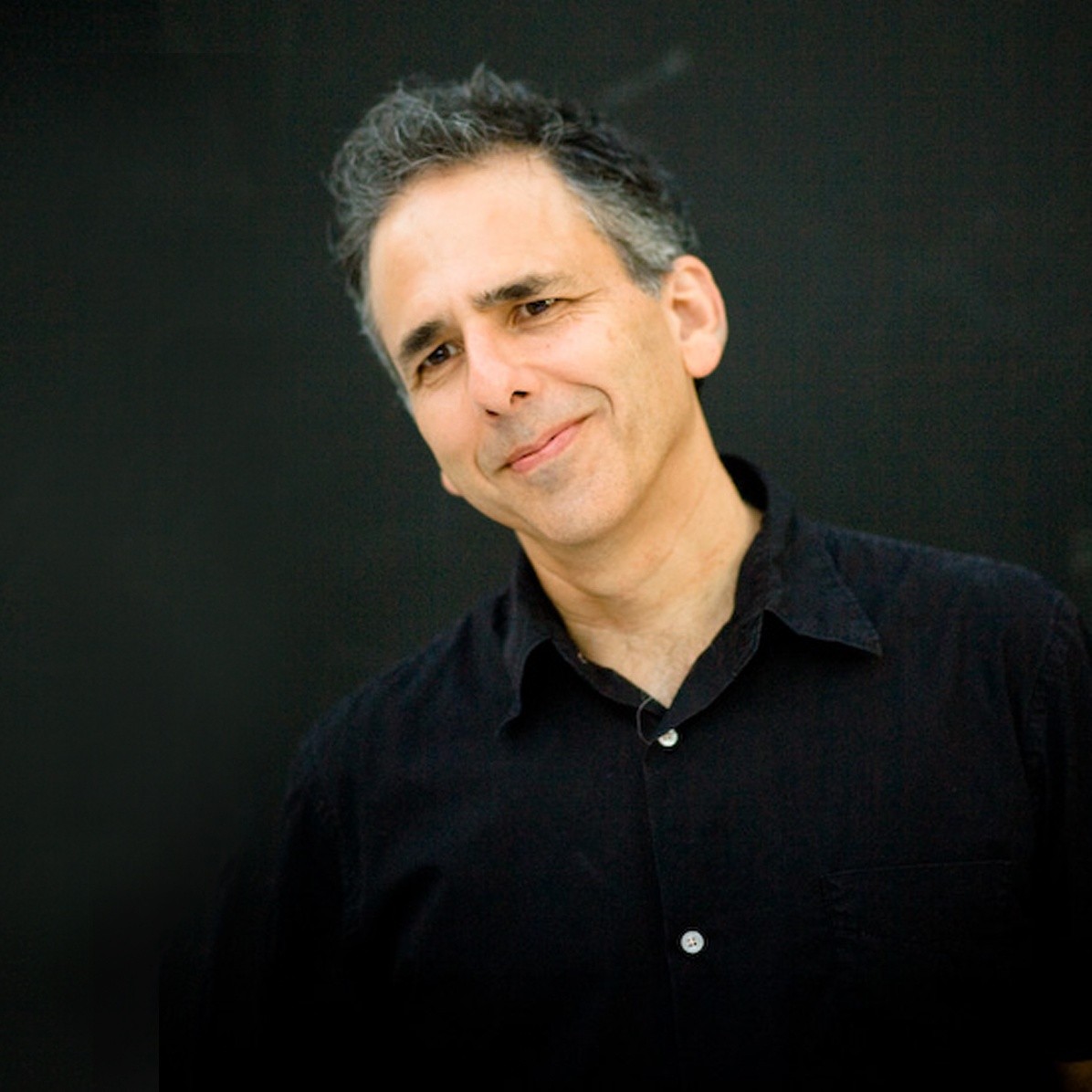
Her music has been performed allover the world by the Kronos Quartet, eighth blackbird, the Minnesota Orchestra, the South Carolina Philharmonic, NOW Ensemble and many others. Upcoming projects include new recordings by eighth blackbird, Kronos Quartet and her own ensemble Victoire, the world premiere of her chamber opera, Song from the Uproar: The Lives and Deaths of Isabelle Eberhardt, at The Kitchen in New York in 2012, and the premiere of a new orchestral work by the League of Composers Chamber Orchestra. Recent performances include a workshop staging of Song from the Uproar at Bard College Conservatory, and a performance by the American Composers Orchestra at Carnegie Hall, She is the recipient of four ASCAP Young Composer Awards, a Fulbright Grant, and grants from the Jerome Foundation and the Barlow Endowment. In 2006 Missy taught composition at Yale University, and is now Executive Director of the MATA Festival in New York City. Missy is also an active pianist, and often performs with Victoire, an "all-star, all-female quintet" (Time Out NewYork) that she founded in 2008 dedicated exclusively to her own compositions. Victoire will release its debut CD on New Amsterdam Records in September, 2010.

ROBERT WOODRUFF
CO-CREATOR & DIRECTOR
Robert Woodruff is one of the country's most versatile stage directors. His theatrical vocabulary encompasses a remarkable range of styles, from the naturalistic simplicity of his productions of Shepard and Bond to his baroque deconstructions of Shakespeare and Brecht. Woodruff collaborates with living playwrights and revisits the masterpieces of the classical canon with equal flair. His body of work resists categorization, and is united only by the power of his imagination and the rigor that he demands of his actors and designers. After thirty years of directing, Woodruff continues to develop fresh dramatic forms with each production.
Woodruff was born in Brooklyn in 1947 and spent his childhood on Long Island. After gaining a B.A. in political science at the University of Buffalo he began graduate studies at the City College of New York. In 1971, disenchanted with the reactionary New York theatre establishment, he moved to San Francisco to seek out new writers and artistic collaborators. The following year he co-founded the Eureka Theatre, where he served as Artistic and Resident Director until 1978.
In 1976 Woodruff established his second theatre, the Bay Area Playwrights Festival, a summer forum for the development of new plays that is still flourishing. It was here that Woodruff first worked with the writer Sam Shepard, on a libretto that Shepard had developed for the national bicentennial celebrations, The Sad Lament of Pecos Bill. The thirty-three year-old playwright was still better known in London than the States, and his collaborations with Woodruff marked a turning point in both men's careers. For the next five years Woodruff was virtually the sole director of Shepard's work, staging the American premiere of Curse of the Starving Class at the New York Shakespeare Festival in 1978, the world premieres of Buried Child (1978) and True West (1980) in San Francisco and New York, and the touring productions of Tongues and Savage/Love, which Shepard co-authored with the performer Joseph Chaikin.
While staging Shepard's naturalistic family dramas, Woodruff developed an unadorned directorial style that emphasized textual precision and subtlety of performance over elaborate stagecraft. From time to time he still draws on this minimalist form, in his recent New York revival of Edward Bond's Saved, for example, and in domestic interludes in Richard II, Full Circle, and In the Jungle of Cities, where time slows almost to a halt, and the most mundane details take on poetic significance.
In 1983 Woodruff staged The Comedy of Errors with the The Flying Karamazov Brothers at the Goodman Theatre in Chicago and at Lincoln Center in New York City. The production was the first in which Woodruff's directorial hand was immediately visible, and audiences were astonished to find fire-eaters, acrobats, and jugglers delivering Shakespeare's language. His formal experimentation continued with a series of major productions at the La Jolla Playhouse in California, and other regional houses including the Mark Taper Forum, the Guthrie Theatre, and the American Conservatory Theatre. Although he continued to stage new plays, he developed a reputation as one of a handful of progressive directors who enjoy working with classic texts from every period.
At La Jolla, Woodruff's productions included radical deconstructions of The Tempest, Happy Days, and Man's a Man, the first part of his cycle of Brecht's early plays that continued with Baal (1990) at Trinity Repertory Company, and In the Jungle of Cities (1998) at A.R.T. Woodruff is particularly adept at unpacking the visceral poetry of Brecht's sprawling epics. Writing in the Boston Globe, Kevin Kelly described Baal as "fiery onslaught. It burns right in front of you, scorches everything it touches, and draws you into the roar of its out-of-control furnace. It may be the single most brilliant Brecht I've ever seen."
Woodruff's investigation of the classics continued with Julius Caesar, The Duchess of Malfi, Medea, and The Changeling. The latter two he staged in Israel, where he has established a considerable body of work. Although these revivals were stylistically very different from each other, they all challenged conventional notions of scale and design. Woodruff frequently avoids a unified aesthetic style in his productions, preferring to create startling visual and aural juxtapositions that shed new light on canonical texts. "Unity is overrated," he once said. "Defining a whole and making all its pieces correspond to that oneness can lead to a stifling politeness. I'd rather take each moment and make it burn, make that color very bright."
One of Woodruff's greatest strengths as a director is his ability to collaborate. Whether staging the first production of a new play or reviving a classical masterpiece, his writers, actors, and designers work with him as equals. He has built firm relationships with some of the world's finest playwrights, performers, and artists, including the scenic designers Douglas Stein and George Tsypin, who have contributed much to Woodruff's visual style. Although he has a strong aesthetic vision, Woodruff allows his collaborators an unusual latitude in shaping each production. "I don't try to control, I try to encourage," he once told an interviewer. "There's something I like about avoiding agreements. Obviously the set designer and the costume designer have to talk about color, but I would almost like to have them separate, to make their own statement. If everybody responds to the material in a way that's true to them, what emerges is the resonance of all those voices rather than the agreement of all those voices. It has to be more interesting."
In recent years, one of Woodruff's chief collaborators has been the playwright Charles L. Mee, who shares his taste for collage composition. Woodruff's A.R.T. production of Mee's Full Circle was a fine example of the director's mature style - a patchwork of dramatic forms that continuously subverted the audience's expectations, forcing them into a new encounter with apparently familiar material, and providing an ironic commentary on Mee's text and the political eruption that it dramatizes. As Full Circle admirably demonstrated, although Woodruff's reputation is as a director of intensely introspective tragedies, he is equally at home in a world of dazzling vaudeville.
Although he lives in New York, Woodruff seldom directs there, preferring the more generous schedules of the larger regional theatres. "You can't do The Comedy of Errors with nineteen vaudevillians in Manhattan," he once said. Since 1997 he has taught directing and acting as Assistant Professor at Columbia University, and has earned a reputation as one of the nation's most committed and popular mentors. In 1983 he told Scott Cummings, then a student at the Yale School of Drama, that one of his greatest regrets about theatre in the States was the lack of formal apprenticeship. "As a director that's very difficult," he said, "because of the responsibility you assume with your role. Directing is by its very nature a master craft. It takes years." Eighteen years later, Robert Woodruff has become one of the undisputed master-craftsmen of the American theatre. It is a great privilege that he has agreed to make A.R.T. his artistic home, and we are thrilled to participate in the next chapter of his remarkable career.
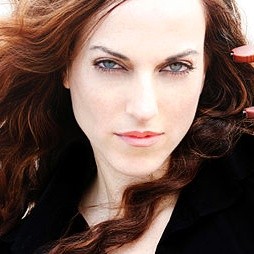
MAYA BEISER
CO-CREATOR & CELLIST
Describing cellist, producer, and multifaceted artist Maya Beiser, The New York Times writes, “The adventurous Ms. Beiser has been called the 'cello goddess,' which is not hyperbole: She summons from her instrument an emotional power so stirring that even the most stoic audience members risk turning into sobbing sacks of flesh.” Passionately forging her artistic path through uncharted territories, Maya Beiser has been captivating audiences worldwide, bringing a bold and unorthodox presence to contemporary classical music, reimagining solo cello performance in the mainstream arena, and defying conventional norms with her boundary-crossing performances. Hailed as “the reigning queen of avant-garde cello” by The Washington Post, she has been called a “cello rock star,” by Rolling Stone and praised as “a force of nature,” by The Boston Globe.
Raised on a commune in Israel’s Galilee Mountains, by her Argentinean father and French mother, Maya spent her early life surrounded by the music and rituals of Jews, Muslims, and Christians, while studying classical cello repertoire. Throughout her extensive career she has been a featured performer on the world’s greatest stages among them Lincoln Center, Carnegie Hall, Brooklyn Academy of Music, the Kennedy Center for the Performing Arts, London’s Southbank Centre, Royal Albert Hall and the Barbican, the Sydney Opera House, Barcelona’s L’Auditori, Paris’ Cité de la Musique, Stockholm’s Concert Hall, and major venues across five continents. Among the wide range of artists with whom she has collaborated are Louis Andriessen, Philip Glass, Tan Dun, Steve Reich, Brian Eno, Mark Anthony-Turnage, Shirin Neshat, Erin Cressida-Wilson, Bill Morrison, Robert Woodruff, Missy Mazzoli, David Lang, Michael Gordon, Julia Wolfe, Evan Ziporyn, Pontus Lidberg, Wendy Whelan, Lucinda Childs, and Joe Hisaishi.
Maya’s vast discography includes fourteen solo albums, many of them topping the classical music charts. She is the featured soloist on numerous film soundtracks, including an extensive collaboration with composer James Newton Howard for M. Night Shyamalan’s The Happening and After Earth, Denzel Washington’s The Great Debaters, Edward Zwick’s Blood Diamond, and Rupert Sanders’ Snow White and the Huntsman. Her performance of David Lang’s “world to come” has been featured on the soundtrack for Paolo Sorrentino’s Oscar winning film, La Grande Bellezza.
Maya Beiser is a United States Artists (USA) Distinguished Fellow in Music and was a Mellon Distinguished Visiting Artist at MIT Center for Art, Science & Technology; Invited to present at the prestigious TED main stage in Long Beach, CA, Maya’s TED Talk has been watched by millions of people. She has been featured on NPR’s Tiny Desk Concerts and All Things Considered, PBS News Hour, and the BBC World News. Maya is a graduate of Yale University.
SUPPORT
Commissioned by Carolina Performing Arts and Beth Morrison Projects.
Originally premiered in a Beth Morrison projects production at Carolina Performing Arts and Brooklyn Academy of Music Next Wave Festival 2012.